
Training
5 In-Demand Web3 Skills Filipino Companies Are Hiring For in 2026
Which Web3 skills actually get you hired in 2026? Here are the five Filipino companies are competing for — and how individuals and teams can build them.
The BLOKC Team · · 7 min read
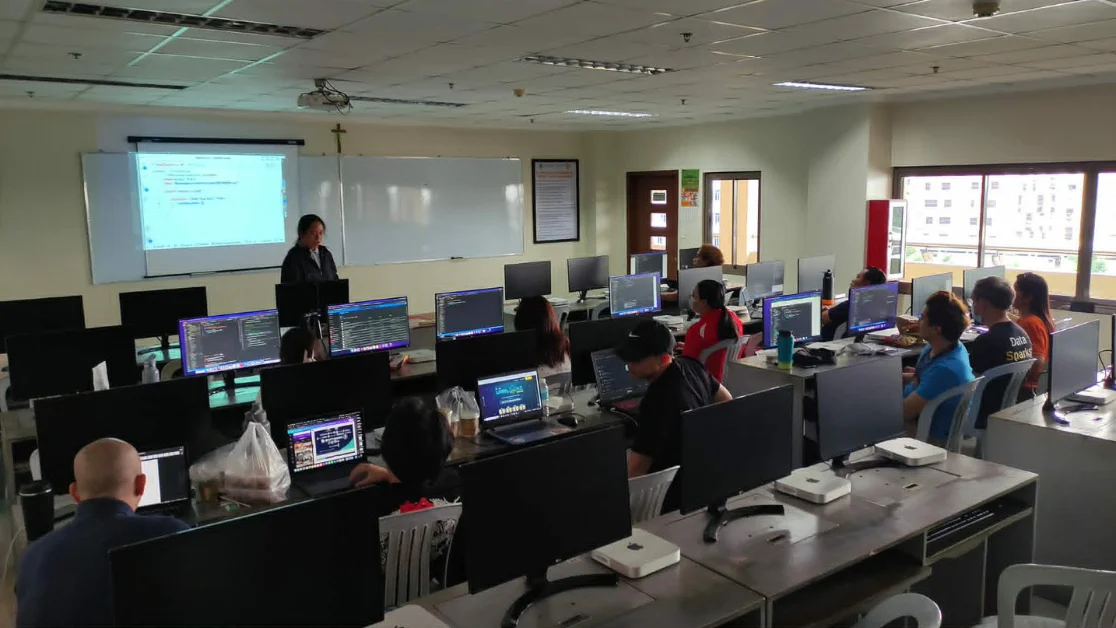
Web3 hiring in the Philippines has matured past “anyone who’s heard of crypto.” In 2026, companies — from startups to established enterprises exploring blockchain — are competing for people with specific, demonstrable skills. Whether you’re a professional planning your next move or a company building a team, here are the five most in-demand Web3 skills right now, and how to build them.
1. Smart-contract development
This is the foundation of nearly every Web3 product, and it remains the single most sought-after skill. Companies need engineers who can design, write, test, and deploy secure smart contracts — the on-chain programs that move value and enforce logic.
What employers want:
- Fluency in at least one ecosystem: Solidity (EVM), Rust (Solana), or Move (Aptos/Sui).
- A portfolio of deployed contracts, not just course completions.
- Solid testing habits and an understanding of gas and performance trade-offs.
How to build it: a structured, protocol-specific bootcamp gets you shipping real contracts far faster than scattered tutorials. New to development entirely? Start with our roadmap to becoming a blockchain developer.
2. Smart-contract security and auditing
Because contracts are immutable and hold real money, security is no longer optional — it’s a premium, well-paid specialization. A single exploit can erase a company’s funds and reputation overnight, which is why teams pay handsomely for people who can prevent that.
What employers want:
- Deep knowledge of vulnerability classes: reentrancy, access-control flaws, oracle manipulation, integer issues.
- The ability to write adversarial tests and reason about edge cases.
- Familiarity with audit processes and tooling.
How to build it: master development first, then go deep on security. Even at a junior level, demonstrable security awareness makes a candidate stand out immediately — most beginners ignore it, so the ones who don’t get hired.
3. Web3 front-end and integration engineering
Behind every usable dApp is an engineer who connects polished interfaces to the blockchain. This skill bridges traditional web development and Web3, and demand is high because most blockchain developers under-invest in user experience.
What employers want:
- Strong JavaScript/TypeScript and a modern front-end framework.
- Hands-on experience with wallet connections and libraries like ethers.js, viem, or @solana/web3.js.
- An eye for UX in a space where bad UX is the norm — and a real differentiator.
How to build it: if you already do front-end work, the Web3 layer is a focused, high-leverage addition to skills you mostly have. Targeted corporate training can bring an existing engineering team up to speed quickly.
4. Blockchain product and project management
Technical skill alone doesn’t ship products. Companies increasingly need people who understand Web3 well enough to lead it — managing roadmaps, tokenomics, community, and the unusual realities of building in the open with decentralized stakeholders.
What employers want:
- A working grasp of how blockchains, tokens, and on-chain economics function.
- Experience coordinating technical teams and translating between builders and business.
- Comfort with Web3-native go-to-market: community, grants, and ecosystem partnerships.
How to build it: non-technical leaders can become genuinely effective with focused upskilling. You don’t need to write Solidity, but you do need enough fluency to make good decisions — exactly what executive and team-level corporate training is designed to deliver.
5. Applied AI + blockchain literacy
The fastest-emerging demand sits at the intersection of AI and Web3. Companies are exploring AI agents that transact on-chain, AI-assisted smart-contract tooling, and decentralized infrastructure for AI. Professionals who understand both domains are rare and increasingly valuable.
What employers want:
- Conceptual fluency in how AI and on-chain systems can combine.
- The ability to evaluate which use cases are real versus hype.
- A foundation strong enough to grow with a field that’s moving weekly.
How to build it: start with solid blockchain fundamentals, then layer AI context on top. The BLOKC has worked at the blockchain-and-AI intersection since 2017, and our programs increasingly reflect where the two fields meet.
For companies: closing the skills gap on your team
You don’t have to hire all of this from outside. Often the faster, cheaper path is upskilling the capable engineers and leaders you already have. That’s the entire premise of corporate training: protocol-specific, hands-on programs tailored to your team’s stack and goals, so your people can design, build, and ship real Web3 projects.
To make the investment count, pair training with certification so skills are validated against real criteria — useful for internal benchmarking and for client-facing credibility.
For individuals: how to stand out in 2026
- Go deep, not wide. One ecosystem mastered beats three half-learned. (Unsure which? See EVM vs. Solana vs. Move.)
- Build in public. A portfolio of shipped projects is worth more than any résumé line.
- Get validated. A certification signals assessed, real skills — especially valuable before you have years of experience.
- Add security awareness. It’s the cheapest way to look senior.
The bottom line
The Web3 skills Filipino companies want in 2026 are specific and demonstrable: smart-contract development, security, front-end integration, product leadership, and AI-plus-blockchain literacy. For individuals, the path is to go deep and prove it. For companies, the path is to upskill the team you have.
Either way, The BLOKC’s bootcamps, corporate training, and certifications are built to turn these in-demand skills into hires, promotions, and shipped products.